Business intelligence software pulls data from across an entire organization into unified dashboards and reports, focused mainly on understanding what already happened. Analytics platforms often go a step further, digging into why something happened and what’s likely to happen next, sometimes with a narrower focus on a specific area like web traffic or marketing performance. The terms overlap a lot in practice, but the distinction is worth understanding.
we’ll break down where these two actually differ, and where the line between them gets blurry.
What Business Intelligence Software Actually Does
Business intelligence, or BI, software is generally built to pull data from across an entire organization, sales, finance, operations, customer service, and combine it into unified dashboards and reports. The goal is usually a clear, high-level view of overall business performance, the kind of thing an executive team reviews to understand how things are going.
BI tools tend to emphasize historical and current performance: what were our sales last quarter, how does this month compare to last year, which regions are performing best. That’s genuinely useful, but it’s largely descriptive, telling you what happened rather than digging deep into why.
What Analytics Platforms Typically Focus On
Analytics platforms cover a lot of ground, but many are built with a narrower, deeper focus than general BI tools, specializing in a specific area like website behavior, marketing campaign performance, or customer interactions. Rather than a broad organizational snapshot, they often dig deeper into the specifics of a single area, showing not just what happened but starting to explain why, and sometimes predicting what’s likely to happen next.
If you want the fuller picture of what falls under this category and how these platforms actually work, our beginner’s guide on what an analytics platform is covers the basics.
Side-by-Side Comparison
| Factor | Business Intelligence | Analytics Platforms |
|---|---|---|
| Scope | Organization-wide | Often focused on a specific area |
| Primary focus | What happened (descriptive) | What happened and why, sometimes predictive |
| Typical users | Executives, leadership teams | Marketing, product, and data teams |
| Data sources | Combined from across the whole business | Often centered on one domain, like web or marketing data |
| Common output | Dashboards and organization-wide reports | Deeper reports, segmentation, and trend analysis |
Where the Line Gets Blurry
In practice, a lot of modern software blends both categories, and vendors don’t always use the terms consistently. Some platforms marketed as “business intelligence” include genuinely deep analytical features, and some tools marketed as “analytics” pull data broadly enough to function like a BI dashboard. The overlap has grown significantly as software companies build more all-in-one platforms rather than sticking to a narrow category.
For a look at how specific platforms in this space actually compare feature by feature, our roundup of the best business intelligence software is worth checking alongside our list of the best data analytics software if you’re trying to figure out which category actually fits your needs.
Which One Does Your Business Actually Need?
If you need a high-level, organization-wide view of performance for leadership to review, a business intelligence tool is generally the better fit, since that’s exactly what it’s built for. If you need to dig deep into a specific area, like understanding exactly why website conversions dropped last week or which marketing channel is actually driving revenue, a more focused analytics platform tends to serve that need better.
Many growing businesses end up using both: a BI tool for the big picture and specialized analytics platforms for deeper dives into specific departments or channels.
Types of Analytics Within Both Categories
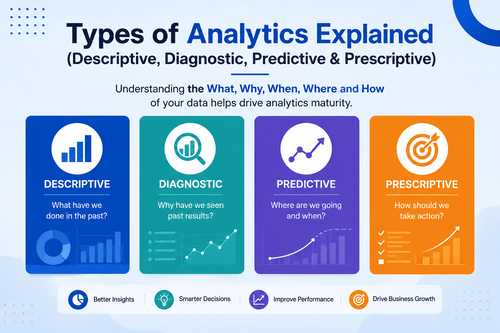
Both BI tools and analytics platforms can incorporate different types of analysis, descriptive, diagnostic, predictive, and prescriptive, though the depth and focus vary by tool. If you want to understand these categories in more detail, our post on types of analytics explained covers exactly what separates each type and where they typically show up.
How to Choose Between Them
Start with the actual question you’re trying to answer. A broad question about overall business health points toward BI. A specific, deep question about one particular area of the business points toward a specialized analytics platform. Our guide on how to choose the right analytics platform for your business walks through this decision in more detail, including how to weigh cost, team skill level, and specific business needs.
FAQs About Business Intelligence vs Analytics Platforms
Are business intelligence and analytics platforms the same thing?
Not exactly, though they overlap significantly. BI tools generally offer an organization-wide view of performance, while analytics platforms often focus more deeply on a specific area and can go further into explaining why something happened.
Which is better for small businesses, BI or analytics platforms?
It depends on the need. A smaller, more focused analytics platform is often more practical and affordable for a small business than a full enterprise BI system, unless you specifically need a wide, cross-departmental view.
Can a business use both BI and analytics platforms together?
Yes, and many growing businesses do exactly that, using BI for high-level organizational reporting and specialized analytics platforms for deeper analysis of specific areas like marketing or product usage.
Do BI tools include predictive analytics?
Some do, especially more advanced platforms, though prediction and forecasting are traditionally more associated with dedicated analytics tools than classic BI dashboards.
Is business intelligence more expensive than analytics platforms?
It varies widely by vendor and features, but enterprise-level BI systems covering an entire organization can be more expensive than a narrower analytics tool focused on just one area.
How do I know if I need BI software or an analytics platform?
Start with the scope of the question you’re trying to answer. Broad, organization-wide questions point toward BI, while specific, deep-dive questions about one area point toward a focused analytics platform.