CodeQL is one of the best-known SAST tools on the market, especially for teams already using GitHub. It’s powerful, highly customizable, and does a great job of finding security issues in source code.
That said, it’s not the right fit for every organization.
Many enterprise teams are looking for something that goes beyond static code analysis. They want fewer false positives, better developer workflows, AI-assisted remediation, and broader application security features without being tied to a single development platform.
The good news is there are plenty of great alternatives available.
In this guide, we’re looking at ten of the best CodeQL alternatives for enterprise SAST in 2026, starting with Aikido Security, our top overall pick.
What Makes a Good CodeQL Alternative?
A good SAST tool should do more than just find vulnerabilities.
It should help developers understand which issues actually matter, fit naturally into their workflow, and make fixing security problems as easy as possible.
For this comparison, we looked at:
- Detection quality
- Developer experience
- AI-assisted remediation
- False-positive reduction
- CI/CD and IDE integrations
- Enterprise scalability
- Additional AppSec capabilities
And now let’s move on to a more detailed comparison of the top 10 CodeQL alternatives in 2026.
1. Aikido Security
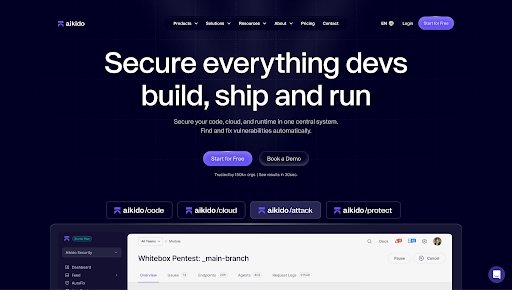
If you’re looking for a SAST tool that’s less tied to a single development platform, Aikido Security is one of the strongest alternatives to CodeQL.
While CodeQL works especially well for teams using GitHub, Aikido takes a more flexible approach. It supports GitHub, GitLab, Bitbucket, and Azure DevOps, making it a better fit for organizations that work across multiple Git providers or don’t want to build their security program around one ecosystem.
Another big difference is that Aikido goes beyond traditional SAST. Alongside static code analysis, it also includes software composition analysis (SCA), secrets detection, malware scanning, cloud security, DAST, runtime protection, and other AppSec tools, so you can manage much more of your application security from one platform.
It’s also built with developers in mind. Security findings appear directly in your IDE and pull requests, and Aikido uses AI to help prioritize what actually needs attention. Instead of showing every possible issue, it automatically triages findings, filters out vulnerabilities that aren’t reachable, and highlights the ones that are most likely to affect your application. Once you’ve identified an issue, Aikido can suggest fixes or even generate pull requests to help developers resolve problems more quickly.
Overall, it feels like a platform that’s designed to help developers fix security issues instead of simply reporting them.
Why you’ll like it
- Works with GitHub, GitLab, Bitbucket, and Azure DevOps
- Developer-first workflow with IDE and PR integrations
- AI-powered triage and remediation
- Reachability analysis helps reduce unnecessary alerts
- Broader AppSec platform that includes SAST, SCA, DAST, cloud security, runtime protection, and more
A couple of things to keep in mind
- If you only need a standalone SAST scanner, the platform may include more functionality than you’ll use.
- Teams will get the most value by using several of Aikido’s security modules together.
Best for: Enterprise teams looking for a developer-first SAST platform that goes beyond static analysis and isn’t tied to the GitHub ecosystem.
2. Semgrep
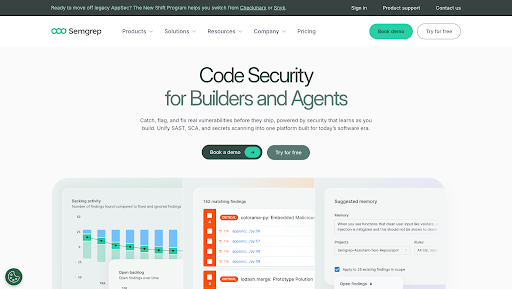
If your team prefers a fast, developer-first approach to SAST, Semgrep is one of the best alternatives to CodeQL.
It’s known for being easy to set up and fast enough to run during development, making it popular with teams that want security feedback without slowing developers down. One of Semgrep’s biggest strengths is its custom rules, allowing security teams to write and fine-tune checks for their own coding standards and security requirements.
Semgrep also integrates well with GitHub, GitLab, Bitbucket, CI/CD pipelines, and popular IDEs, so developers can catch issues early rather than waiting until later in the development process.
Why you’ll like it
- Fast scans
- Easy to customize with your own rules
- Strong developer workflow
- Great CI/CD integrations
A couple of things to keep in mind
- Some advanced capabilities are only available in the commercial edition.
- Large enterprises may want broader governance features.
Best for: Teams that want fast, customizable SAST with a developer-first workflow.
3. Checkmarx One
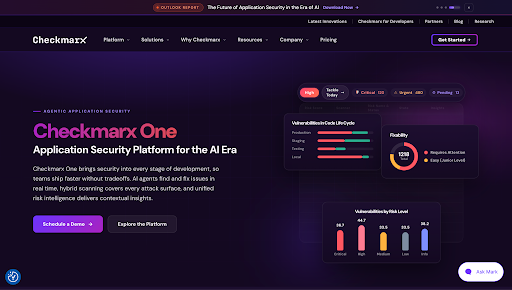
Checkmarx One has been one of the biggest names in enterprise application security for years, and it’s still a popular choice for large organizations.
Rather than focusing only on SAST, Checkmarx combines static analysis with software composition analysis (SCA), infrastructure-as-code scanning, API security, container security, and more. It’s designed for organizations that need centralized security policies across large development teams.
While it’s a very capable platform, it also tends to be one of the more complex options on this list. Smaller teams may find it more than they need, but larger enterprises often appreciate the depth of security and governance features.
Why you’ll like it
- Mature enterprise platform
- Broad AppSec coverage
- Strong language support
- Built for large organizations
A couple of things to keep in mind
- Can take longer to implement than newer developer-first tools.
- Often better suited to dedicated security teams.
Best for: Large enterprises with mature application security programs.
4. Veracode
Veracode has been a trusted name in application security for a long time, especially among larger organizations.
It’s much more than a SAST tool. Alongside static analysis, Veracode offers DAST, software composition analysis (SCA), container and infrastructure-as-code scanning, and tools that help developers fix vulnerabilities earlier in the development process. One of its biggest strengths is how well it fits into enterprise development workflows, with integrations for IDEs and CI/CD pipelines.
If your organization already has a mature security program, Veracode is a solid option. It offers plenty of reporting and governance features, although it can feel like more platform than smaller teams actually need.
Why you’ll like it
- Mature enterprise AppSec platform
- Covers SAST, DAST, SCA, containers, and IaC
- Strong reporting and compliance features
- Integrates well into existing development workflows
A couple of things to keep in mind
- Better suited to larger organizations than small teams.
- The platform has a steeper learning curve than some newer developer-first tools.
Best for: Large enterprises looking for a mature application security platform.
5. GitHub Advanced Security
If your development team already lives inside GitHub, GitHub Advanced Security (GHAS) is one of the easiest alternatives to CodeQL.
In fact, CodeQL is one of the technologies that powers GitHub Advanced Security, but GHAS builds on it with features like secret scanning, dependency scanning, security campaigns, and AI-assisted vulnerability resolution. Because everything happens inside GitHub, developers don’t have to learn another platform or leave their existing workflow.
The downside is that it’s closely tied to GitHub. If your teams use GitLab, Bitbucket, or multiple Git providers, you’ll probably want something more flexible.
Why you’ll like it
- Works seamlessly inside GitHub
- Combines SAST with secret and dependency scanning
- Familiar workflow for GitHub users
- AI-assisted remediation features
A couple of things to keep in mind
- Best suited to GitHub-based development teams.
- Less flexible if your organization uses multiple Git platforms.
Best for: Enterprises already using GitHub as their primary development platform.
6. Snyk Code
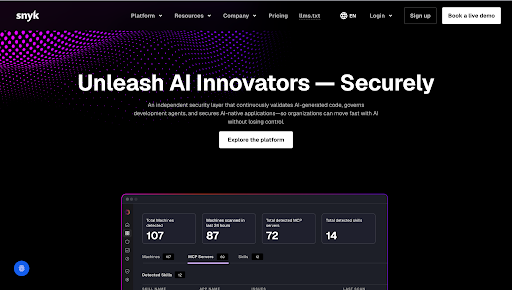
Snyk Code is another popular developer-first alternative to CodeQL.
One thing that makes Snyk stand out is how quickly developers can start using it. It integrates directly into IDEs, pull requests, and CI/CD pipelines, helping developers catch vulnerabilities while they’re writing code instead of waiting until later in the release process.
Snyk is probably best known for software composition analysis, but its Code product also provides static analysis with clear explanations and practical remediation guidance. That makes it especially appealing for teams that want security without slowing down development.
Why you’ll like it
- Easy for developers to adopt
- Fast feedback inside IDEs and pull requests
- Strong remediation guidance
- Excellent CI/CD integrations
A couple of things to keep in mind
- Costs can increase as teams grow.
- Some organizations may still need additional tools for broader AppSec coverage.
Best for: Development teams that want fast, developer-friendly security scanning.
7. SonarQube Server
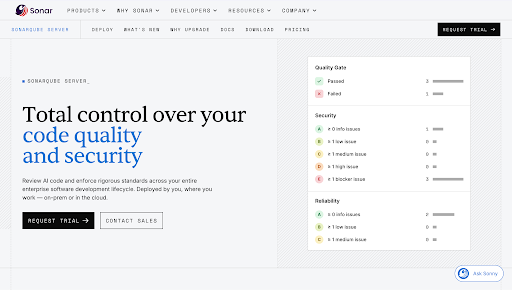
Most developers know SonarQube as a code quality tool, but it also includes security analysis that can help identify common vulnerabilities alongside bugs and maintainability issues.
If your team already uses SonarQube, adding its security capabilities is an easy way to improve code security without introducing another platform. Many organizations also like its Quality Gates, which help stop new issues from being introduced into production.
That said, SonarQube isn’t designed to be a complete enterprise AppSec platform. If security is your primary focus, you’ll probably want to pair it with dedicated security tools.
Why you’ll like it
- Combines code quality and security
- Familiar to many development teams
- Quality Gates help enforce coding standards
- Easy to integrate into CI/CD pipelines
A couple of things to keep in mind
- Security isn’t its main focus.
- Doesn’t offer the same breadth of AppSec features as dedicated platforms.
Best for: Teams already using SonarQube for code quality that want to strengthen their security scanning.
8. Fortify by OpenText
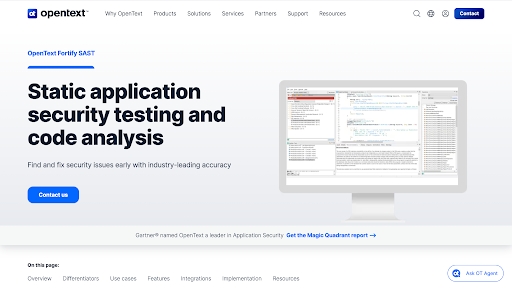
Fortify has been part of enterprise application security for many years, and it’s still a common choice for large organizations with dedicated security teams.
The platform supports SAST alongside DAST, software composition analysis, and other testing capabilities, giving organizations a broad view of application risk. It also offers detailed reporting, compliance support, and automation that can help teams manage security across large development environments.
Fortify is a very capable platform, but it’s also one of the more complex tools on this list. If you’re looking for something that’s easy for developers to pick up, there are simpler alternatives available.
Why you’ll like it
- Mature enterprise security platform
- Covers multiple types of application security testing
- Strong reporting and compliance features
- Well suited to large organizations
A couple of things to keep in mind
- Can take longer to deploy and manage than newer tools.
- Better suited to dedicated AppSec teams than smaller development teams.
Best for: Large enterprises with mature security and compliance requirements.
9. GitLab Ultimate
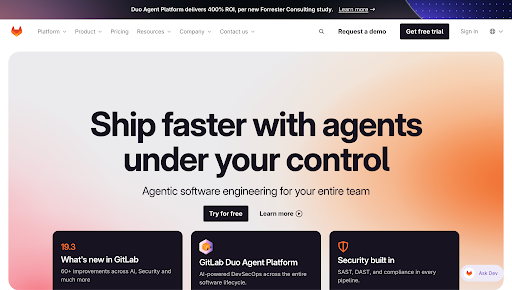
If your team already builds and ships software with GitLab, GitLab Ultimate is an obvious alternative to CodeQL.
Instead of adding another security platform, GitLab includes SAST directly in its CI/CD pipeline. It also offers vulnerability management, advanced SAST, dependency scanning, secret detection, and AI-powered features like false-positive detection and automated merge requests for fixing high-severity vulnerabilities.
For teams already invested in GitLab, having everything in one place is a big advantage. Developers don’t need to switch between different dashboards, and security becomes part of the normal development process.
Why you’ll like it
- Built directly into GitLab
- Strong CI/CD integration
- AI-assisted vulnerability triage and remediation
- Includes several AppSec tools beyond SAST
A couple of things to keep in mind
- Best suited to organizations already using GitLab.
- Teams using multiple Git platforms may prefer a more independent solution.
Best for: Organizations that want to keep security inside their GitLab workflow.
10. Mend.io
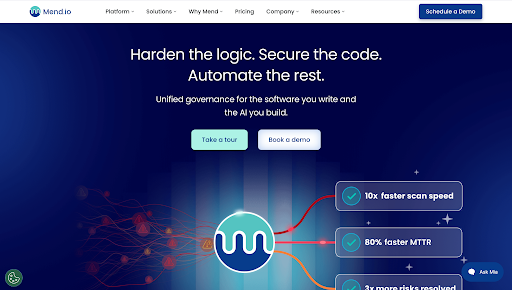
Mend.io is another strong enterprise AppSec platform that’s well known for software composition analysis, but it also offers SAST as part of its broader security platform.
What we like about Mend is that it focuses on helping developers fix vulnerabilities rather than simply reporting them. Its SAST combines static analysis with AI-powered remediation guidance and integrates into existing CI/CD pipelines and developer workflows. It also supports a wide range of programming languages and provides compliance reporting for enterprise teams.
If you’re looking for a platform that combines SAST with open-source dependency security and broader application security capabilities, Mend is definitely worth considering.
Why you’ll like it
- Combines SAST with a broader AppSec platform
- AI-assisted remediation guidance
- Good CI/CD integrations
- Strong compliance and reporting features
A couple of things to keep in mind
- Enterprise-focused platform that may be more than smaller teams need.
- Some advanced features are aimed at larger organizations.
Best for: Organizations looking for both code security and open-source dependency management.
Conclusion
CodeQL is still an excellent static analysis engine, but it’s no longer the only option for enterprise application security.
Many organizations now want platforms that help developers fix issues faster, reduce false positives, and cover more than just source code scanning.
That’s why tools like Aikido Security, Semgrep, Checkmarx, Veracode, and the other platforms on this list are becoming increasingly popular. They don’t just find vulnerabilities – they help development teams manage security throughout the entire software development lifecycle.
The best choice comes down to your team’s workflow, your existing development tools, and how much of your application security you want to manage from a single platform.